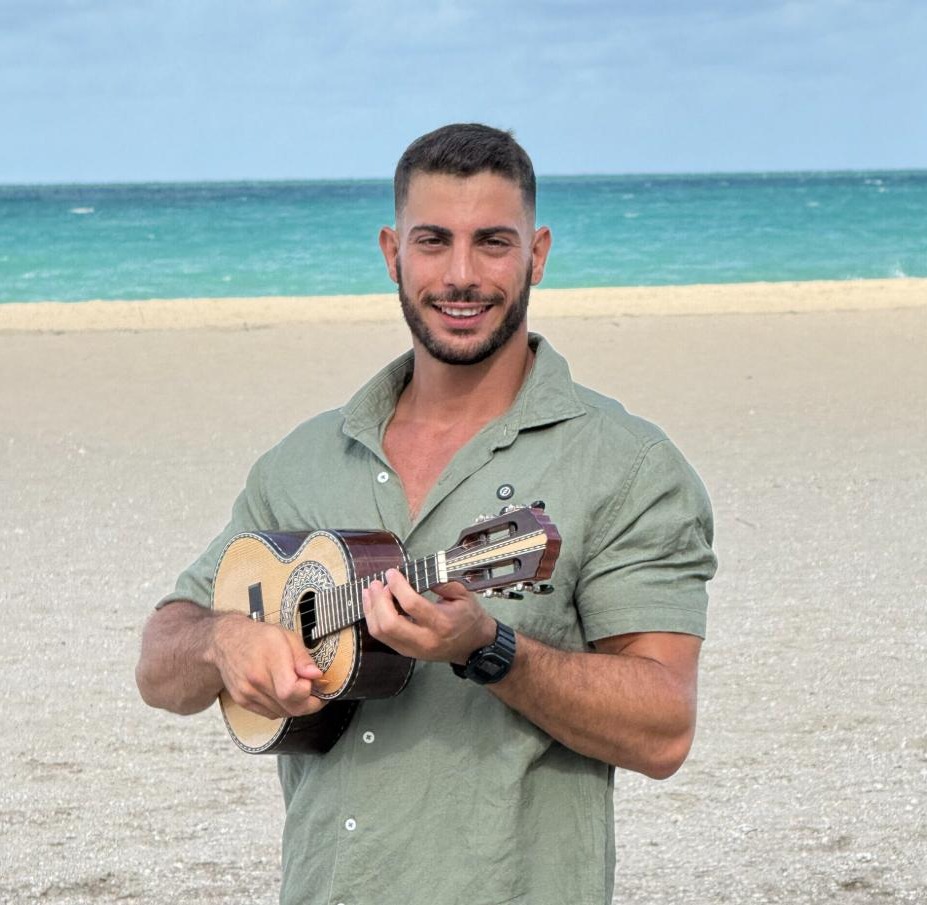
In 2018 I converted to Judaism, in Argentina. In 2019 I made aliyah. Today I live in Tiberias, facing the Sea of Galilee.
At my grandmother's house in Belo Horizonte, there were things people did and nobody explained. A candle lit on Friday afternoon. The broom that swept the dirt inward, never out the door. Mirrors covered when someone in the family died. At the funeral, each of us threw a handful of earth on the coffin. Cut nails and hair did not go in the trash: they were buried, and cutting had a set day, at the new moon.
Nobody called that Judaism. It was just grandma's way. Years later, studying, I found these gestures again one by one in the books: the Shabbat candle, the covered mirrors of shiva, the earth the family itself puts on the coffin, the nails the Talmud says not to throw just anywhere.
What was missing was not information. It was lived experience.
I went looking for it. In Buenos Aires I entered the tradition through the right door, in community, and in 2018 I converted. In 2019 I crossed the sea and came to live in Tiberias, where the Hebrew calendar is the calendar of the street. I learned Shabbat in a city that stops, the holidays at the pace of the neighborhood, Hebrew words at the market and on the bus.
By day I work at Meitav Beit Hashkaot, where I am a supervisor, and I am starting klik, a studio for websites and creatives for local businesses. Herança Hebraica happens in the time that is left: at night, on Friday before the candles, on weekends. It is the record of this walk, for anyone who wants to understand the tradition without religious weight, with depth and beauty, in Portuguese.
Everything I write here comes with the source beside it: the verse, the Talmud tractate, the paragraph of the Shulchan Aruch. Anyone who wants to follow up will find the way.
And I write thinking of those who have a grandmother like mine. If your family also had a gesture nobody could explain, you are in the right place.